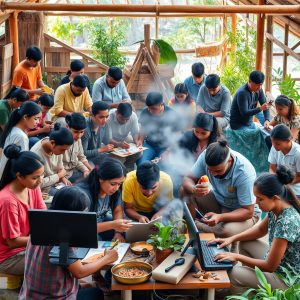
The Garden of Knowledge: How Nature-Based Exploration Cultivates Lifelong Learners
There’s something inherently magical about learning outside the confines of four walls. The rustling leaves, the scent of damp earth, the way sunlight filters through the canopy—nature doesn’t just serve as a backdrop for education; it becomes the teacher itself. Nature-based exploration is more than a trend in alternative education; it’s a return to the roots of how humans have always learned. By stepping into the wild, learners of all ages engage in a form of experiential knowledge building that textbooks and lectures simply cannot replicate. The forest, the river, the mountain trail—these are not just places to visit, but dynamic classrooms where curiosity is the curriculum and the world is the syllabus.
The Classroom Without Walls
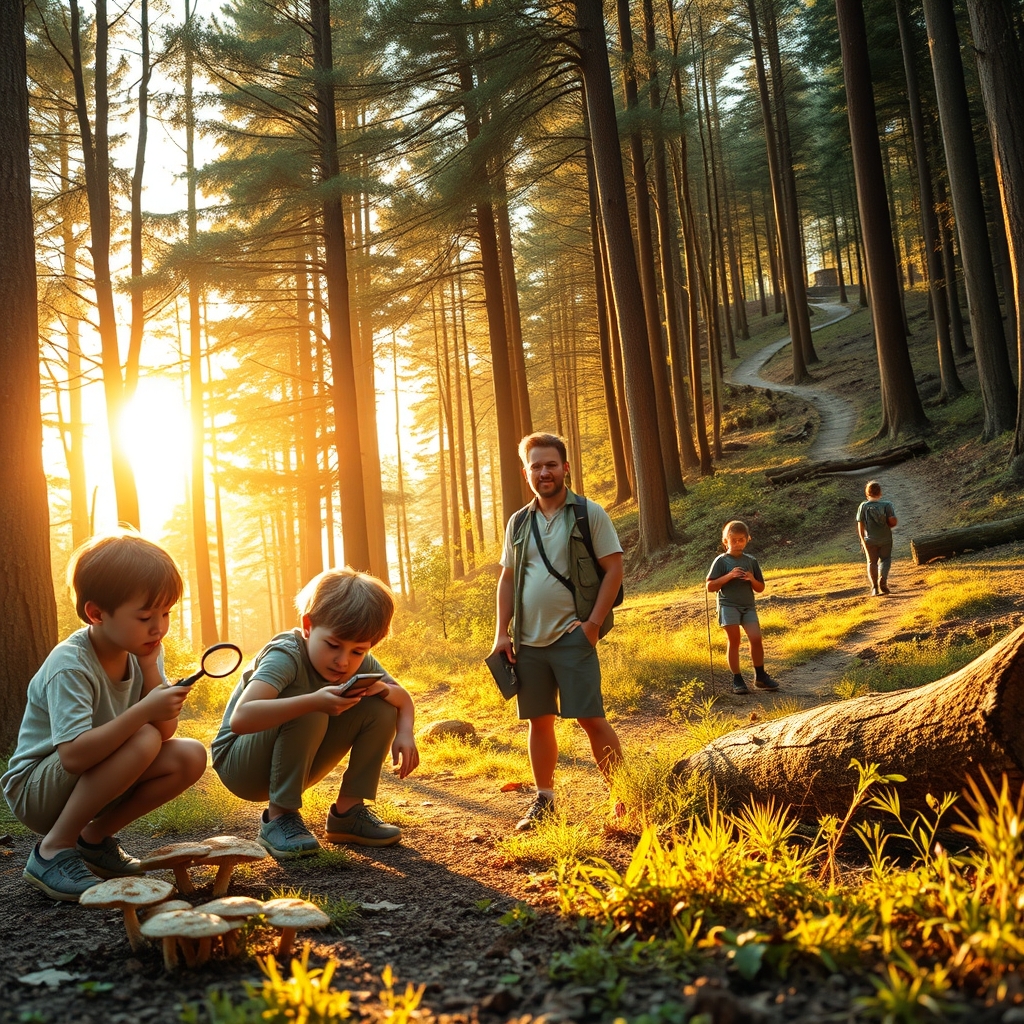
Imagine a group of children gathered around a fallen log, dissecting it with magnifying glasses to study the insects and fungi that call it home. Or a teenager learning to navigate using only the stars, the wind, and the contours of the land. These are not scenes from a bygone era but examples of how nature-based exploration is being integrated into modern learning. Unlike traditional education, which often prioritizes memorization and standardized testing, this approach emphasizes observation, inquiry, and hands-on discovery. The natural world is unpredictable, and that unpredictability is its greatest strength as a learning environment. It forces learners to adapt, to think critically, and to develop a deep, intuitive understanding of the systems that govern life.
Schools and learning communities that embrace this model often report remarkable shifts in their students. Children who struggle in conventional classrooms may thrive when given the freedom to explore at their own pace, guided by their interests. Teenagers who feel disconnected from their studies often rediscover their passion for learning when they see its direct application in the real world. Even adults, whether through forest therapy sessions or citizen science projects, find that nature-based learning offers a refreshing antidote to the rigidity of formal education. The outdoors doesn’t just teach biology or ecology—it teaches resilience, patience, and a sense of wonder that stays with learners long after they’ve left the trail.
From Roots to Branches: The Holistic Growth of the Learner
Nature-based exploration is not just about acquiring knowledge; it’s about holistic personal growth. When learners step into a natural environment, they engage not only their minds but also their bodies and emotions. Climbing a tree requires physical strength and coordination, but it also demands courage and problem-solving skills. Identifying bird calls or tracking animal prints sharpens observational abilities while fostering a sense of connection to the living world. Even the act of sitting quietly in a forest, practicing mindfulness, can teach emotional regulation and self-awareness—skills that are often overlooked in traditional education but are essential for navigating life’s challenges.
This holistic approach extends beyond the individual. Nature-based learning often takes place in groups, fostering collaborative interest groups where participants share discoveries, solve problems together, and build a sense of community. A group of hikers might work together to identify plants along a trail, or a team of volunteers could collaborate on a river cleanup project. These shared experiences create bonds that go deeper than those formed in a typical classroom. They teach empathy, communication, and the value of collective effort—qualities that are increasingly vital in a world that often feels fragmented and isolated.
The Role of Mentorship in the Wild
While nature-based exploration is inherently self-directed, the role of a mentor or guide cannot be overstated. A skilled mentor doesn’t just impart knowledge; they model curiosity, encourage experimentation, and help learners connect their experiences to broader concepts. In the context of nature-based learning, mentors might be park rangers, naturalists, or even experienced peers who have spent years exploring the outdoors. They act as bridges between the learner and the environment, helping to translate observations into understanding and curiosity into action.
For example, a mentor leading a group of children on a nature walk might pause to ask open-ended questions: “Why do you think this tree grows here and not over there?” or “How do you think this animal survives the winter?” These questions don’t just test knowledge; they invite learners to think like scientists, to hypothesize, and to test their ideas. Over time, learners begin to adopt this mindset independently, developing the skills of self-directed education pathways that will serve them throughout their lives. The mentor’s role is not to provide all the answers but to nurture the learner’s ability to find them.
Bridging the Gap: Nature-Based Learning in the Digital Age
In an era dominated by screens and digital interactions, nature-based exploration offers a vital counterbalance. Yet, it would be a mistake to view it as entirely separate from the digital world. In fact, technology can enhance nature-based learning in powerful ways. Apps for identifying plants and animals, GPS devices for navigation, and online platforms for sharing observations with global communities are just a few examples of how digital literacy development can intersect with outdoor education. These tools don’t replace the experience of being in nature; they deepen it, allowing learners to engage with the environment in new and meaningful ways.
Consider a group of students using a citizen science app to document the species they encounter in a local park. Their observations might contribute to a global database, connecting their small, local experience to a larger scientific effort. Or imagine a teenager using a drone to map the topography of a nearby forest, combining technology with hands-on exploration. These experiences teach learners that the digital and natural worlds are not opposing forces but complementary tools for understanding and engaging with the world.
The Ripple Effect of Nature-Based Learning
The benefits of nature-based exploration extend far beyond the individual learner. When communities embrace this approach, they often see a ripple effect of positive change. Schools that incorporate outdoor learning report improved student engagement, reduced stress levels, and even better academic performance in traditional subjects. Communities that prioritize access to natural spaces see increased civic engagement, as residents develop a deeper appreciation for their local environment. And on a global scale, nature-based education fosters the next generation of environmental stewards—people who understand the interconnectedness of all life and are motivated to protect it.
This ripple effect is perhaps most evident in the way nature-based learning encourages real-world problem solving. When learners are given the opportunity to tackle challenges in their local environment—whether it’s restoring a degraded wetland, designing a sustainable garden, or advocating for the protection of a green space—they develop skills that are directly applicable to the complex issues facing our world. They learn that solutions require creativity, collaboration, and a deep understanding of the systems at play. These are not just academic skills; they are life skills that empower learners to make a difference in their communities and beyond.
There’s a reason why so many people describe their most profound learning experiences as happening outside the classroom. Whether it’s the child who discovers the joy of tracking animals in the woods, the teenager who finds their voice while leading a group hike, or the adult who rediscovers their sense of wonder while stargazing, nature-based exploration has a way of touching something deep within us. It reminds us that learning is not a destination but a journey—one that is best undertaken with an open heart, a curious mind, and a willingness to step into the unknown. The garden of knowledge is vast, and its most valuable lessons are often found where the wild things grow.