The Invisible Thread: How Peer-to-Peer Knowledge Sharing Weaves the Fabric of Lifelong Learning

In a world where information is abundant but wisdom is scarce, the most transformative learning often happens not in lecture halls or through screens, but in the quiet exchanges between people who share a curiosity. Peer-to-peer knowledge sharing has emerged as a powerful force in informal skill acquisition, turning everyday conversations, shared projects, and spontaneous collaborations into rich educational experiences. Unlike traditional education, which often follows a top-down approach, this model thrives on mutual respect, shared enthusiasm, and the organic flow of ideas.
The Magic of Shared Curiosity
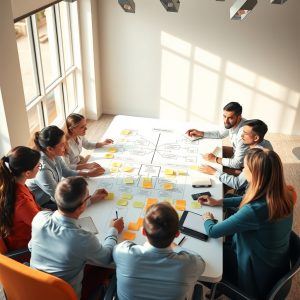
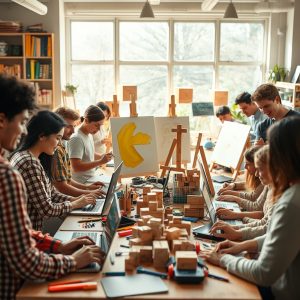
Imagine a group of urban gardeners swapping tips on composting, a coding club debugging a project together, or a book club dissecting a novel’s themes over coffee. These moments are not just social—they are deeply educational. When people come together around a shared interest, learning becomes a dynamic, reciprocal process. Each participant brings unique perspectives, experiences, and skills, creating a tapestry of knowledge that no single person could weave alone. This is the essence of peer-to-peer learning: it transforms passive consumption into active creation, turning learners into teachers and teachers into learners.
Breaking Down Barriers
One of the most compelling aspects of peer-to-peer knowledge sharing is its ability to dismantle the hierarchies that often stifle learning. In formal education, the teacher-student dynamic can create a power imbalance, where the flow of knowledge is one-directional. But in collaborative interest groups, everyone has something to offer. A beginner might ask a question that challenges an expert’s assumptions, while someone with years of experience might share a shortcut that saves hours of frustration. This egalitarian approach fosters a sense of belonging and empowerment, making learning feel less like a chore and more like a shared adventure.
The Role of Digital Literacy
The rise of digital platforms has amplified the reach and impact of peer-to-peer learning. Online forums, social media groups, and video-sharing platforms have become virtual classrooms where people from different corners of the world can connect over shared passions. A woodworker in Tokyo can learn from a carpenter in Buenos Aires, while a musician in Lagos can collaborate with a producer in Berlin. Digital literacy, in this context, is not just about navigating technology—it’s about leveraging it to build bridges between people and ideas. These platforms also democratize access to knowledge, allowing anyone with an internet connection to participate in the global exchange of skills and experiences.
The Alchemy of Real-World Problem Solving
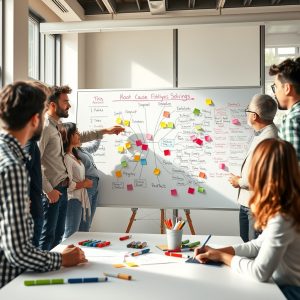
Peer-to-peer learning shines brightest when it’s applied to real-world challenges. Whether it’s a group of neighbors brainstorming solutions to local environmental issues or a team of developers collaborating on an open-source project, the act of solving problems together deepens understanding and builds resilience. Unlike theoretical learning, which can feel abstract, experiential knowledge building is rooted in action. It’s one thing to read about sustainable farming; it’s another to work alongside others to design a community garden. The hands-on nature of these experiences makes the learning stick, turning abstract concepts into tangible skills.
Cultural Heritage and Personal Growth
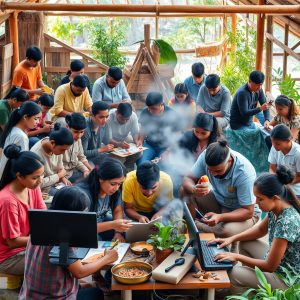
Peer-to-peer knowledge sharing is also a powerful tool for preserving and celebrating cultural heritage. In communities around the world, elders pass down traditions, stories, and crafts to younger generations through informal mentorship. These exchanges are not just about preserving the past—they’re about fostering a sense of identity and continuity. For the learners, engaging with cultural heritage can be a deeply personal journey, one that connects them to their roots while also inspiring them to innovate. For example, a group of young artisans might learn traditional weaving techniques from a master craftsperson, then adapt those techniques to create contemporary designs. This blend of old and new keeps cultural practices alive while also making them relevant to modern life.
The Future of Learning: Adaptive and Autonomous
As the world becomes more complex and interconnected, the ability to learn continuously and adaptively is becoming a survival skill. Peer-to-peer knowledge sharing aligns perfectly with this need, offering a flexible, self-directed education pathway that evolves with the learner. Unlike rigid curricula, which can become outdated quickly, collaborative learning environments are fluid and responsive. They allow individuals to tailor their education to their interests, goals, and pace, making learning a lifelong pursuit rather than a finite phase of life.
The Power of Community
At its core, peer-to-peer learning is about community. It thrives in spaces where people feel safe to ask questions, make mistakes, and grow together. These communities can take many forms—a local makerspace, an online forum, or a group of friends meeting weekly to practice a new language. What they all share is a commitment to mutual growth and a belief that everyone has something valuable to contribute. In a world that often feels divided, these learning communities remind us of the power of connection and the transformative potential of shared knowledge.
The beauty of peer-to-peer knowledge sharing lies in its simplicity and its depth. It doesn’t require expensive tools or formal credentials—just a willingness to engage, to listen, and to share. In a time when education is often commodified and standardized, this model offers a refreshing alternative: one that is human-centered, adaptive, and deeply enriching. It reminds us that learning is not a solitary endeavor but a collective journey, one that becomes more meaningful when we walk it together. Whether through a casual conversation, a collaborative project, or a shared passion, the invisible threads of peer-to-peer learning weave a fabric that connects us all, one idea at a time.